
TIPS ON DRAWING


Basic tips - Drawing


  • The most important thing is to understand what you're drawing - anatomy, no matter if animal or human body. At least you should learn the basic skeleton (bones / joints) and how it works. Using photos / pictures as reference is of course also useful, but only by looking at a photo you will not understand how the body moves. So the best suggestion would be to watch and study live animals (e.g. in a zoo).

  • Think about getting yourself books to learn about anatomy, perspectives, proportions, etc. Artists on galleries like DeviantART also offer a lot of tutorials - use the search option and search for "anatomy tutorial" for example. Not all of them are good/useful, but some of them are.

  • Some useful links (anatomy) and book suggestions you can find here.

  • Understand the differences between breeds - a cheetah's anatomy looks way different to a tiger's for example. A snow leopard is not just a regular leopard with grey fur. Canine paws do not look the same like feline paws. Depending on what style you want to draw (toony or realistic), this is a very important point.

  • Collect and use reference photos (in different positions).

  • "Skill comes with practice"
    Before you start getting lost in details, practice the simple basic forms of a body (even a hard-work detailed and full-colored picture may look crappy if the anatomy sucks). This can be only a line for the spine and some circles for the head and body. The more you practice, the more you will understand the anatomy and get a feeling for it, the easier it will become to draw good anatomy pictures. Then you can continue working on the details.

  • "Constructing a human body"
    For a human body there is a simple rule of thumb to get the right proportions - You can divide the body into 8 (or some people also only use 7) segments. Of course people's body proportions can vary, but as a rough guide this is very useful:

    1. Head (chin)
    2. Shoulders/Chest (until nipples)
    3. Belly/Stomach (until navel)
    4. Hips (until crotch)
    5. Upper thighs
    6. Lower thighs (including knees)
    7. Lower legs
    8. Lower legs + feet

  • "Constructing an animal body"
    As most animals have quite a different body construction (the skeleton is of course the same, but not the proportions of the bones), you need to know and understand the proportion of the species you want to draw. Like a cow has a longer body/torso and shorter legs than a horse.

  • "Fantasy creatures"
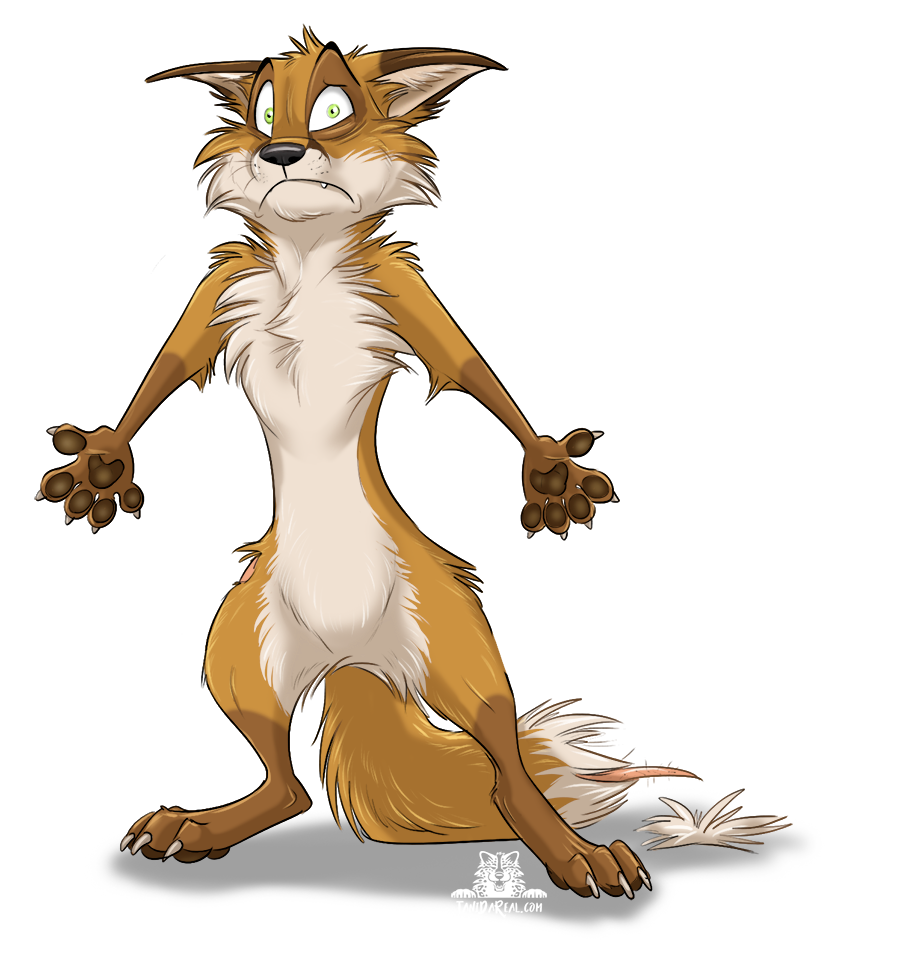
    Fantasy creatures, like anthropomorphic animals (e.g. animals with a human-like body / walking on 2 legs), may have a different anatomy than a regular human. There are endless ways of interpreting what an "Anthro" might look like - some prefer the more human versions (plain feet, same proportions like a human body), others prefer the more animalistic style (paws instead of hands, digitigraded legs). But no matter which way you prefer, the anatomy should look "right".

  • Tip:
    Check anatomy, proportions and perspective of your sketch by looking at it in a mirror or turning the page on a light table. The mirror-inverted look will make it much easier to recognize mistakes.

  • For facial expressions (to express the right emotions) - look at yourself in a mirror. There is no better model than watching the different expressions of yourself in the mirror. Try different sketches to find out what is important for different emotions (like the size/form of the eyes, the form of the mouth, etc.).

  • Ask for feedback! Show your sketch to other artists, let them give you critique and advice. Nothing is more frustrating when you put much work into coloring and then everybody says "... but the anatomy looks terrible!"

  • Be patient and keep on practising! :) Most good artists are already drawing for years. Be critical, but don't compare yourself too much with other artists (this is not a competition and everybody has his/her own style!). There is no "secret" - practice and understanding is the key. "Blind copying" will not get you anywhere.


General tips - Material

  • Better use a bigger paper than you think you need - doing a nice sketch and then realizing that you've got to cut off the feet because the paper ends is really frustrating.

  • Don't use lined or squared papers! This will make your drawing look ugly no matter how good it turns out (and you can't even fix the scan). Use white, blank paper. It's worth it.

  • Choose the right drawing material. For example - if you want to ink a picture and then color it with water colors - use good waterproof ink for the outlines! Normal black markers might smudge with the water.

  • If you want to draw a picture with traditional media (e.g. colored pencils), I suggest using good quality pencils, like Polychromos by Faber Castell. They're more expensive but much brighter and more colorful than cheap pencils. For just sketching and testing, cheaper pencils are fine though.

  • Highlights are a nice effect and make your art more vivid, for both traditional and digital artwork. For traditional artwork, try to use a thin white ink pen for the highlights (eyes).

  • Dare to try out different media (digital, watercolors, pencils, etc.). Not everybody has the same skills with every media. Try what works best for you and what you like best.

  • If you decide to draw/color digitally, think about getting a graphic tablet. The best brand I recommend is Wacom. They have very professional tablets, but also cheaper ones that also work fine. Coloring by mouse is a pain in the ass. ;)


General tips - Motivation

  • Got your first "Art Block" and feel like you're not able to draw anything any more? Welcome, I guess every artist already experienced that at some time. Don't worry, it will go away again. Try to have a look your artwork that you like yourself, take a look at other artist's work that you like, draw themes or characters that you really like (maybe your own ones), or try to draw something completely new (to master a challenge can bring you motivation again, too).

  • Draw what you want! Don't let others "force" you what to draw by telling the topic would be boring or something else would be "trend". If people don't like the themes you're drawing - they don't have to look at it.

  • Don't compare yourself to other (better) artists! Don't let artwork of others discourage you (cause you may think you will never be able to draw like that). Good artwork should be a motivation and inspiration to learn drawing like that, not cause depressions because you aren't that good (yet).

  • You've already got drawing experience - but somehow you're drawing the same thing or poses again and again? Dare to experience something new, something you haven't drawn before, even if it's hard at the beginning. Everybody needs challenges, otherwise it might get boring.

  • Don't try to copy other (maybe popular) artists (imitating "styles"). Of course it's OK to get inspired and learn from others' artwork, but if you try to copy everything 1:1, people will pretty easily recognize that, and you will also copy the drawing mistakes other artists do - you don't really learn anything by that. Try to understand what you're doing, and create your own style.

  • Be respectful with copyrights and art permissions.